Showing posts with label Tennis. Show all posts

Friday, 30 January 2009

A Crying Shame- The Greatest Tennis Player-Not that One!


Would Tiger Woods be considered the best of all time if he consistently lost to Phil Micklson, even if he inevitably overhauls Nicklaus' 18 majors? Can an athlete be considered the greatest of all time if he has an overwhelming losing record against the second best of his era?

By that token, can Federer be considered the greatest Tennis player of all time after having a losing record of 6-13 against Nadal? Federer went 0-4 the whole of 2008 and has now lost the last three grand slam finals they have contested to Nadal on clay, grass, and on a hard court. Can he really be considered the best in his sport when every time he is put under pressure by his nemisis in the fifth set, he seems to come apart at the seams?

Its a vexing question (thanks OS) to ask of Federer, who at 27 is already the most accomplished (well almost) as well as the most lyrical player anyone has ever seen. Sampras won 14 grand slams at the age of 31 having contested 52 grand slams. Federer has still only played 39. There are few detractors of Federer's claim to greatness- even Sampras and Laver have hailed him. But the question that now hangs over his legacy like a scimitar is: does he have a mental frailty dealing with Nadal?

And it is indeed a mental thing. Federer reached the Australian Open finals breezing over his opponents and serving like the champ he is. He sent down twice the number of aces as his opponent in downing Roddick- one of the most formidable servers in the game today. Yet, when it came to Playing Nadal, his first serve- a barometer of confidence- betrayed him. He only got in half of his first serves (52%). In the fifth set, when you expected Nadal to start feeling the effects of his epic semi-final with Verdasco and his body to run out of electrolytes, it was Federer that became flat.

I have been a big admirer of Federer (Federer Made me Fail the Tebbit Test), but even I can sense that the gap between him and Nadal seems to be growing into a chasm. And the chasm is not in the quality of the game. It is entirely mental. When you see Federer play anyone else, the elegant single handed back hand cross-court is serene, the inside-out forehand is unstoppable, and the killer serves are on tap. When he plays Nadal, and especially when the stakes are high, he seems to get thrown off his game. He got crushed in the French Open, flubbed a match point in the Wimbledon epic, and could not serve to save his life when it got to set 5 of the Australian Open. You can almost read his mind in the changeovers- "can I really beat this guy?"

Federer is considered for the title of greatest of all time because he measures up to the yardstick most used for tennis (or golf)- number of grand slams won. At 13, he is one shy of the all time best. Nadal has only got to 6 majors so far, but can Nadal be measured by another yard stick? Can he be measured by by Federer? Can he be measured against the contender for the title?

The two of them have now won 18 of the last 21 grand slams between them. They also collectively possess the longest winning streaks on each of the three surfaces- Federer on grass (65) and hard courts (56), Nadal on clay (81), and it has been the other man that ended each of those streaks. Previously on this blog, Nadal did not even make the list of the top 17 greatest tennis player of all time? (See Greatest Tennis Players of All Time- A Numerical Approach). Since then, he has taken his grand slam total to six, a number surely to go up. He has put together the longest ever 81 match unbeaten streak on clay. He has also beaten Federer at the peak of his game again and again, and on different surfaces. He still has ways to go, but is he rather than Federer, shaping up to be the best tennis player of all time?

Thursday, 1 January 2009

Top 10 Sporting Moments of 2008

What a year it has been. A feast of excesses for the sporting fan. Most years we could struggle to make a top 10 list and this year events from other years' lists would struggle to get in. There were the spectacular Chinese Olympics to cap the year off but sports outside held their own, from golf and tennis to Formula 1 and cricket. Big Brown almost nipped the triple crown, IPL was born in cricket, Tampa Bay reached the world series despite never having a winning record and the US finally stormed the Ryder Cup of Golf. But none of these made the top 10. Here is the list of the top 10 moments as I saw them:

10. Greg Norman blows up at the British Open


It was reminiscent of the 1986 Masters that Nicklaus won at the age of 46. Except Norman was 53 now and led by 2 strokes going into the final round- and in true Norman fashion (1 for 7 when he led a major after 3 rounds) he blew up, opening with 3 bogies to relinquish the lead and then finishing with a round of 77 (winner Harrington scored a 69). But for three rounds he had everyone awake defying the wind and rains at Royal Birkdale. For three rounds he had everyone shaking their heads with smiles on their faces. For three rounds he had everyone loving the sport.

9. Celtics beat the Lakers


The most storied basketball rivalry in history (even with its own video game) was revived this year as the Celtics beat the Lakers 4-2 in the NBA finals. Together the two teams have won 31 out of the 62 NBA championships ever contended for but there hadn't been the same rivalry since Bird and Magic. This year they met up with more than the world championship at stake. Lakers coach Phil Jackson was going for his 10th championship, which would have overtaken the legendary Celtics coach Red Auerbach on the all time list. Looks like it gave the Celtics that added incentive.

8. Defeat of Australian Cricket


Most non-Australians were looking forward to seeing the cockiness drain out of the Australian faces but when the moment came it turned out to be an anti-climax. It was always going to be difficult to replace the likes of Warne and McGrath, but within the frame of 2 series Australia lost to India away and now to South Africa at home. After a dominance of more than a decade there seems to be little the Australians can do to stem their decline.

7. Manchester United Double


This is a photo of John Terry of Chelsea taking the 10th and what was supposed to be the final penalty kick after the game was tied 1-1 after extra time. Had he scored, Chelsea would have won the Champions League- but he slipped and hit it wide while Van der Sar dived the wrong way, giving Manchester United a memorable Premier League and Champions League double.

6. Lewis Hamilton wins the F1 crown on the last lap


After 18 races the entire championship came down to a pass Hamilton made on the final bend of the final race (article) for the closest finish in the 58 year history of Formula 1. There was such confusion that both Hamilton's Mclaren and Massa's Ferrari garages rushed out in jubilation to celebrate their victories- only for the Ferrari people to realize they had been beat. Car racing mad Britain got its first F1 champion in 12 years.

5. Spain finally wins Euro 2008


Spain have always played creative and attacking football that is pleasing for the eye but had failed to win any silverware for 44 years. Boring defensive teams like Italy and Germany (not anymore) used to win but flair artists like Holland and Spain did not. Well they finally came through, with players like Torres, Alonso, Fabergas, Xavi, Villa and Casillas, beating Germany 1-0 in the final.

4. Rafa Nadal wins Wimbledon


John McEnroe called it the best Wimbledon final he has seen. Some praise since the Borg-McEnroe final is the only other one that would have been in contention. Nadal had thrashed Federer in the French Open final weeks earlier and most of us were expecting order to be restored. Instead Nadal came out all guns blazing and won the first two sets. Federer came back by winning set 3 and 4 in tie breaks (10-8 in the 4th). Nadal let 2 match points go in the fourth. Was his moment gone? In near darkness, at 9:15 at night, Nadal won the 5th set 9-7. A well deserved victory that also ended Federer's 65 match, 6 year winning streak on grass. By the end of 2008, Nadal had his fourth French Open title, a Wimbledon crown, the Olympic gold medal and the men's number 1 ranking as well.

3. Tiger gets a leg up in the US Open


He only seemed to wince when his shots went wrong. Surely, he was milking the injury, even if he had one. Showmanship notwithstanding, the caliber of the game was outstanding. First, he had to birdie the 72nd and last hole of regular play to make the 18 hole play-off with Rocco Mediate. On Monday he had to birdie the same hole again to extend his challenge to extra holes, before he won on the 91st hole. Oh, and any doubts about faking the injury were removed the next day when he announced he would have a fourth surgery on his left knee and also rehabilitate from the double stress fracture in his left tibia. Oops, guess he was in pain then.

2. Phelp's eight golds


It is easy to forget how close Phelps was to not achieving the magic 8 gold medals, not once but twice. In the 4X100m relay, Phelps team mate Jason Lezak touched the water half a second behind world record holder Alain Bernard of France and then out swam Bernard by 0.08 seconds by finishing his leg in an incredible 46.06 seconds (The world record for 100m is 47.05 and relay times don't qualify). Then in the 100m butterfly, he was trailing at the end and took an extra half stroke at the finish to pip Milorad Cavic of Serbia by 0.01 seconds. In all, he won 8 gold medals, broke 7 world records, and an Olympic record.


1. Usain Bolt's double


Running the fastest 100m by any human being ever, while slowing down in the last 20m by thumping your chest in celebration, with the left shoe laces open. If that doesn't take the crown of the best sporting achievement, what does? Well, you could double up by breaking the 12 year old 200m world record that many thought was unbreakable. And then just for good measure, win the gold in the 100m relay with a world record as well. Phelps may have the bigger achievement, but Bolt captured the biggest moment of 2008.

Wednesday, 15 October 2008

Pressure- British Press Wags the Dog

Pressure makes diamonds. Pressure also makes sports stars. It separates the wheat from the chaff, the men from the boys, the champions from the also-rans. How many of us have made that jump shot, that putt, or bowled the yorker on middle stump when we are alone in the play ground? When we are pretending to be watched by the entire world as we shoot the buzzer beater in game 7 or win the masters or a test match against Australia, whereas its just us? Real pressure is different- "when he boasted that he could shoot the stem of a wine glass from a hundred yards, I asked him, can you shoot the stem of wine glass when the wine glass has a rifle pointed at your heart?" That's pressure.


But pressure is not always positive, even for professional athletes. Anyone who saw the Japanese Grand Prix last weekend got a glimpse of how pressure can melt prospective world champions into bumbling bafoons. Contending for their first title, Felippe Massa and Lewis Hamilton drove like teenagers on adrenalin, overshooting corners, hitting each other and other drivers, before finishing 7th and 12th respectively. So if you are cheering for Hamilton, would you construct an environment of pressure around him that would make it more difficult for him to win the championship? For that is exactly what the British press is doing.

The Sunday Times has 24 pages devoted to sports. A recent issue had 20 of those pages devoted to football. There is also a 12 page football supplement on Mondays. The Times has five dedicated sportswriters for football alone. There is also The Telegraph, The Guardian, The Observer, The Independent, Daily Express, Daily Mail, Metro, Evening Standard, Daily Mirror, The Sun, and News of the World that have their own extensive sports sections. How to feed this beast? Where to come up with stories through the news cycles to fill all these pages, to sustain all these journalists?

So when Liverpool plays Chelsea, out come stories about Steven Gerrard switching clubs and going to London. There is then a round of denials, followed by some Chelsea player saying they would love to have Gerrard. The Liverpool chairman is quoted as saying Gerrard is "not for sale at any price". Inter-Milan jumps in with their interest. Reports emerge of a threat to harm his family if he moves from Liverpool. Why he doesn't replicate club form for country starts becoming a topic again. Can he play with Lampard? Should he be center of mid-field, left of mid-field, or in a forward role behind the striker? You are starting to get the picture.

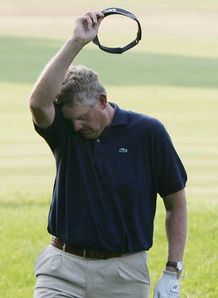
Before long he feels the pressure. Every time he steps on the pitch he feels the pressure. Every time he has a bad day at the office, the pressure multiplies. One of the greatest mid-field players in the world is questioned again and again until perhaps he himself starts believing the press and becomes a shadow of the player he can be whenever he dons the national colours. Tim Henman probably felt the same pressure every time he stepped onto the hallowed grounds of Wimbledon. It's probably not a coincidence Colin Montgomery won eight European Orders of Merit and still kept striking out every time he was in contention for a major.

In Italy there is a newspaper dedicated to sports called "gazetta dello sport", but the broad sheets like La Repubblica or Corriere della Sera devote no more than 4 to 6 pages to sports. Le Monde in France usually gives 2 pages to sports. Will British athletes start performing better if there is less attention from the press? Interesting question, but I don't think we'll ever find out.

Sunday, 28 September 2008

The Fiercest Rivalries in Sport

Borg vs McEnroe, Spurs vs Arsenal, Palmer vs Nicklaus, Federer vs Nadal, Michigan vs Ohio State, Lakers vs Celtics, the list of great rivalries is endless. Few things fascinate and engage the followers of sport as much as a great rivalry. It is often the yardstick by which greatness is measured. Six time world champion and Olympic gold medalist Sergei Bubka broke the world record 35 times and was the greatest pole vaulter of all time, but he never captured the popular imagination because no one came close to challenging him. There is some base human desire that gets enthralled by duels, whether lion vs slave at the Colosseum, or Federer vs Nadal at Wimbledon.

So the natural curiosity, given my predilection for lists and rankings, was to figure out the fiercest rivalries in sport. As subjective as which cheese tastes the best, but an interesting exercise nevertheless. To have some quantum of objectiveness, its divided into three un-mixable sections; individual rivalry, club rivalry and national rivalry. Here are the top 3 in each category:

Individual Rivalries
Number 3 for Individuals- Navratilova vs Evert


Rivalries last a few matches or a few years but very few individual rivalries last 14 years at the top level (from Evert's win in Italian Open final in May 1974 to Navratilova's win in Virginia slims final in Nov 1988 they faced off in 60 finals). The life time record of the two was 43-37 in favour of Navratilova, but most of Evert's losses came towards the end of her career. The dominance of the two was such that between 1982 and 1986, the pair won 18 out of 19 grand slams between them. Evert won 90% of all her matches. Navratilova had the longest winning streak of 74 consecutive matches. Evert has 157 singles titles, Navratilova has 167. Evert has 18 single major titles, Navratilova has 18 as well (best male tennis player of all time has 14). Despite the rivalry they grew close and Navratilova even introduced Evert to her second husband Andy Mills. Fittingly, when Evert hosted Saturday Night Live in 1989, in the kick-off skit a Navratilova character showed up everywhere Evert was and outdid her at whatever she was doing. Their rivalry was intense, but always remained civil.

Number 2 for Individuals- Prost vs Senna
There are fierce rivalries and there are bitter rivalries but this one was fiercely bitter. Formula 1 racing is one of the most dangerous sports to start with but you know its getting personal when drivers start banging their cars into each other just to take their opponent out. This was the duel between the fire of Senna and the ice of Prost. In 1989 in the second to last race of the season in Suzuka, Prost drove into his team mate Senna, taking them both out of the race and in the process winning the drivers' championship. The next year Senna got even by driving into Prost at 190 mph on the very first turn of the same track and winning the championship. Honours even but the rivalry had turned bitter forever. When Prost Joined the Williams team in 1993, he had a clause inserted in his contract that prevented Senna from being his team mate that year. Later at the Interlagos circuit, Prost had to have a police escort, he was so reviled in Brazil. When he couldn't prevent Senna from joining Williams the following year, he chose to retire rather than be his team mate. By the end, Senna won 41 races with 65 pole positions and 3 championships while Prost won 51 races with 33 pole positions and 4 championships. Both have a legitimate claim to be the all time great of their sport. Unfortunately Senna died in a car crash at the Imola circuit in 1994. He had told a friend he realized after Prost's retirement how much of his motivation had come from competing against Prost. One million people showed up to Senna's funeral in Sao Paolo. Alain Prost was one of the pall bearers.

Number 1 for Individuals- Ali vs Frazier

"It's gonna be a chilla, and a killa, and a thrilla, when I get the gorilla in Manilla". While Muhammad Ali entertained the world with his psuedo-rap, smacking a rubber gorilla in his hands, such words really got under Frazier's skin. He never forgave Ali for calling him "uncle tom" and the "white man's champion" prior to their first fight. What is not widely known is that Frazier had helped Ali through his boxing ban for refusing to serve in Vietnam by showing up at tribunal hearings in support and had even given Ali hundreds of dollars in cash to support him. Ali maintained that he said all these things to promote the fight but Frazier did not buy that and felt deeply betrayed. Their rivalry would become one of the most storied of all time and they would fight each other three times over their careers. Known as "the fight of the century", the first fight took place at Madison square Garden in 1971. Frazier had a 26-0 record with 23 KO's. Ali had a 31-0 record with 25 KO's. The fight also came to symbolize the anti-establishment camp in Ali and the pro-War movement in Frazier. Frazier won by unanimous decision after 15 rounds, but Ali gained respect for recovering from a 15th round knock down to finish a fight he had no chance of winning. Both fighters spent time in the hospital after the fight. Ali-Frazier II was also at Madison Square Garden in 1974. By this time Frazier had been demolished by Foreman so it was no longer a title contest, but the hostility between the two was still palpable. Promoting the fight on TV, both were reviewing their first fight when an argument led to a fist fight on the set and a fine for both boxers. In the ring later, Ali came away the winner by unanimous decision after twelve rounds. In October of 1975, the last and perhaps the best fight between the two took place, popularly known as "the thrilla in Manilla". Ali had beaten Foreman, Norton and Wepner since his last fight with Frazier and was riding high in confidence. He prepared lightly and was distracted by his torrid affair with Veronica Porche. Frazier on the other hand was seething with revenge and always managed to save his best for Ali. In the fight, Ali started strong but faded in the middle rounds and Frazier started punishing him. Legend has it that around the 6th round Ali whispered in Frazier's ear: "Joe, they told me you was all washed up" and Frazier barked back, "they lied" and followed it with a left upper cut. However, Frazier grew tired by the 10th and Ali managed to get enough jabs in that both Frazier's eyes swelled up. We would later find out that Frazier had a cataract in his left eye so was fighting almost blind for the last three rounds. Ali made it a one sided fight in the 14th round and Frazier's trainer Eddie Futch stopped the fight after the round, despite much protesting from his fighter. Author David Halberstam summed it up best: "the only way we know of Ali's greatness is because of Frazier's equivalent greatness, that in the end there was no real difference between the two of them as fighters."

Did not make the top 3: Borg vs McEnroe, Sampras vs Agassi, Federer vs Nadal, Palmer vs Nicklaus, Alydar vs Affirmed, Ted Williams vs Joe DiMaggio, Magic vs Bird, Jahangir vs Jansher, Imran vs Hadlee, Tendulkar vs Lara, Schumacher vs Hakkinen, Jeff Gordon vs Dale Earnhardt, Wilt Chamberlin vs Bill Russell, Hagler vs Hearns, Duran vs Leonard and Gretzky vs Lemieux.

Club Rivalries
Number 3 for Club Sports
- Boston Redsox vs NY Yankees
The Redsox and Yankees have an embittered and fierce rivalry of over 100 years that is often referred to in America as "the greatest rivalry in sports". After Babe Ruth was traded to the Yankees in 1919, the Bosox were said to suffer from "the curse of the Bambino"- they failed to win a world series for the next 86 years, while the Yankees gathered 26 of them. It all changed in 2004 when Boston finally overcame NY and went on to win the world series- and then won it again in 2007. The Yankees haven't won since 2000.

Number 2 for Club Sports- Boca Juniors vs River Plate


Both teams are from Buenos Aires and matches between them are known as the "superclasico". Boca has a more working class following while River Plate has a more affluent fan base. One of Boca's stands is entirely of stacked boxes (called La "bonbonera" or chocolate box) while River Plate followers are called "Los Millionarios". The match thus adds an element of the class divide as well. There is huge following of the two clubs in the whole of Latin America and when the Observer newspaper made a list of "50 sporting things you must do before you die", watching a "superclasico" in Buenos Aires was top of the list.

Number 1 for Club Sports- Celtic vs Rangers

There are 12 clubs that play football in the Scottish Premier League but only two that have ever won it. The Celtic-Rangers rivalry goes back to 1888 and the two teams are such a world apart, they even have a special name of their own: "the old firm". Religion, politics and social attitudes are all involved in old firm derbies, where the mostly Irish and Catholic supporters of Celtic are pitted against protestant republican followers of Rangers. There has been unfortunate instances of sectarian violence ensuing after games between the clubs. The rivalry is so fierce that only five players have ever moved between the two clubs in almost a hundred years. A study said admissions to hospital emergency rooms increases nine-fold over normal days on old firm match day weekends. It easily makes Celtic vs Rangers the most fiercely contested rivalry in all club sports.

Did not make the top 3: Redskins vs Cowboys, Ohio State vs Michigan, Galatasaray vs Fenerbahce, Inter Milan vs AC Milan, Real Madrid vs Barcelona, Arsenal vs Spurs, ManU vs Liverpool, Olympiacos vs Panathinaikos, Oxford vs Cambridge Crew, Boston Celtics vs Lakers, Notre Dame vs USC, Ferrari vs McLaren, Dinamo Zagreb vs Red Star Belgrade, Maple Leafs vs Canadiens.

Country Rivalries
Number 3 for National teams- America vs Europe in Golf's Ryder Cup
This rivalry has a relatively short history but the passion involved, including bitterness at fans behaviour towards players, is intense. The gamesmanship, the patriotism it espouses, the drama, the ridiculous outfits of the spouses, and some exceptional golf has made this biennial event one of the most anticipated sports event watched across the world. The score line is 8-7 in favour of the Europeans since it became Europe vs USA in 1979 and the intensity can be judged by the fact that there is always some bitterness voiced by the losing team. From walking across putting lines to prank calls in the middle of the night for opponents, its all been done in the Ryder Cup.

Number 2 for National teams- Brazil vs Argentina in football
Some of the best footballers in the world are from the the two countries. Between them they have won the world cup seven times. Brazil have won the World Cup 5 times and the Copa America 8 times, while Argentina have won the World Cup 2 times and the Copa America 14 times. Their close rivalry is reflected in their 35-34 record in favour of Brazil since their first match in 1914. Another dimension to the rivalry is often lent by the two players mentioned most for the title of greatest player of all time- Pele and Maradonna. In 1946 there were instances of broken legs during two consecutive games, which resulted in an abandoned game and fighting on the pitch with police. In the 1990 World Cup, Brazilians accused the Argentinian coaches of giving one of them water laced with tranquilizers (known as the "holy water scandal"). The amount of football passion involved makes any international meet between the two countries an all consuming affair for the fans.

Number 1 for National teams- India vs Pakistan in Cricket
Three wars in 60 years coupled with the religious fervour of cricket in the national psyche, provides for combustible ingredients for a passionate rivalry. Very few places in the world does sport, politics and religion mix in such a portent way. Traffic vanishes from the roads in the two countries of over a billion people when India play Pakistan. In a previous trip to Pakistan during the World Cup, all TV sets and electricity generators were sold out in the market in anticipation of the cricket match. While the rivalry is statistically tilted in Pakistan's favour (leading Tests 12-9 and ODI's 68-45), India have managed to win all the World Cup encounters so far and also won the inaugural Twenty20 tournament by narrowly beating none other than Pakistan in the final. In 1986, Javed Miandad hit a last ball six for an improbable come from behind victory that lead to souring of cricket relations for a decade. The 1991 Pakistan tour of India had to be canceled because youths from the local extremist party Shiv Sena party dug up the pitch at Bombay's Wankhade stadium. In 1999, with Pakistan ready to tour India for the first time in 12 years, Shiv Senna dug up the pitch at Delhi again but it was repaired in time. The Asian Test Championship match against India had to be finished in the eerie silence of an empty stadium after the 90,000 crowd at Eden Gardens Calcutta invaded the pitch as India inched towards certain defeat. And for all the mighty victories, Pakistan has never been able to top India when it's mattered most, in a World Cup. After one defeat to India in a World Cup, the Pakistani players had to go in hiding and father of ace bowler Wasim Akram was kidnapped by enraged fans. It often doesn't take much for this sibling rivalry to rise to the level of sheer lunacy.

Did not make the top 3: England vs Australia Ashes, USA vs USSR Ice Hockey, England vs Germany football, Australia vs USA swimming.

10 Famous Sports Celebrations

Long before the TV is turned on and the spectacle of sport is broadcast around the world, long before the ball boys show up, the grass is cut, the lines drawn or the referees show up, there is sheer hard work by the athletes. Miles are run, hills are climbed, weights are lifted, balls are hit and putts are practiced over and over and over again. Almost all the great athletes we cheer for these days have done little else for every single day of their adult lives except for practice their sport. The days of being a carpenter for your day job and hitting boundaries at the weekend at Lords are long gone. When such hard work results in success on the playing field, sometimes the celebration is spontaneous and ecstatic. Yet at other times, celebration has become tradition and as much a part of winning as playing the game. Here are a few of my favourite and while photographs might not do them justice, it was not possible to source videos for all of them.


"Rock the baby" celebration. Introduced in the 1992 Football world cup by Babeto of Brazil, the original celebration was probably meant to celebrate his impending child. It has since become mandatory for any expecting father scoring a goal.


"The Dunk" was first performed as a revenge act by NY Giants defensemen to legendary coach Bill Parcels in the 1980s, for the previous weeks training woes. It has become the ultimate end of game celebration in American Football- from the pro game to children's leagues, whether a scorching match in the heat of Florida or a -30 degress bone chilling duel on the frozen plains of Minnesota. Here in the picture is Patriots super-bowl winning coach Bill Billicheck getting dunked.


Shirt over face- Some feats are too good to be believed and in football you find goals a plenty scored from some unbelievable positions. When the adrenalin is high, you see some players do the shirt over face blindfold and run like crazy. Here, we see Fabrizio Ravanelli in mid-celebration.


Biting the trophy- Done in the old days to check coins for authenticity, Rafa has without fail bit every single award he has won. The move seemed to be gaining popularity as medal winners in other sports at the Beijing Olympics were seen doing the same.


Hats on ice- When a player scores a hat trick in ice-hockey, it is the custom for the crowd to throw their head gear onto the playing surface in respect. It still happens and is one of the moving sights in sports if you ever witness one live.


Boxing with the flag. Tim Cahill of Everton and Australia started the tradition of running over to the corner flag and boxing with it after scoring a goal. When asked why he did it, he's supposed to have answered "well the flag started it".


The chest bump- originally started in basketball, the jumping and thumping celebration has spread to all American sports. Its the adrenalin filled version of a high five.


The fist pump- Perhaps an old fashioned simple way of channeling a testosterone surge after a moment of achievement, it has been trade marked by Tiger Woods after sinking long unbelievable putts.


Doing the Airplane- Shoaib Akhtar has arguably done more than his share of celebration but when he's at his deadly best, he never lets a wicket go uncelebrated without doing the airplane.


The Ssshhh- Here we see Thiery Henry silencing the opposition through one of his trademark goals. Very popular with footballers when scoring on away games in front of boisterous audiences.

Friday, 12 September 2008

Federer Made Me Fail the Tebbit Test

I admit it. I failed the "Tebbit Test". For those who need a refresher, Baron Norman Tebbit of Chingford famously devised this test a decade or two ago during an England-Pakistan cricket match. The honorable Baron was rather disturbed by the behavior of British Pakistanis betraying Queen and country and cheering for the men in green instead. He suggested that if there was a 'cricket test' to see which side you cheer for, a large portion of the British Asian population would fail it. The tabloids loved the idea and ran with it and it was 'christened' (no pun) the "Tebbit Test". A concept the honorable Barron returned to after the 7/7 London train bombings, making us feel like the enemy for cheering for the wrong cricket team, but I digress.

So a few years ago when I pledged allegiance to the Queen and got a purple passport (to prevent latex glove checks at airports, but I digress again), it felt like converting to a religion without really believing in it. Will I cheer for England cricket when they play Pakistan? Not if hell freezes over! But I was a bit surprised when I found myself gradually cheering British. First it was at the Ashes, but then I told myself who doesn't like rooting against the Aussie plonks. Next I found myself deflated when the England Football team got the two failures under Ericcson and I cheered hard for Britain at the Olympics. So like a Jew who eats pork, I allowed myself this one excess in my "Britishness". Other than when they play Pakistan at cricket, I cheer for all teams British.


It was in the same spirit that I found myself yelling my lungs out in support of Murray when he played Nadal in the semi-final of the US Open. Here was a chance (for us British-yeah!) to make up for the years of under-achievement by Henman. And what a victory it was. Murray out-muscled the muscular Nadal and won a beautiful game through powerful serves and relentless returns. He was even un-Murray like gracious in victory. So on Monday I put the kids to sleep early and settled in for a rooting session for a first British grand slam victory since Fred Perry in 1936.

Federer was in no mood to be denied though for he was on his own quest. If this was a "coming of age" match for Murray, it was a "mid-life crisis" for Federer. This year he lost his Wimbledon crown, his top world ranking and failed to get the Olympic gold. He knew he'd be written off by pundits if he lost this too and perhaps he was equally fighting his inner demons after so many defeats. The way he answered those doubts left me shaking my head in disbelief and appreciation and left little room for melancholy at the downing of my boy Murray. Federer's flowing ground strokes were back and the nimble touch was present as ever. It was poetry in motion and as a sports fan you knew it was time to enjoy an all time great back to his best. Grand slam number 13 leaves him one short of all time leader Sampras (see previous post) and with the young and hungry Nadal, Djokovic and Murray closing in, there can't be many more left in the tank. So with apologies to Baron Tebbit, cheering Murray will have to wait and I think I'll enjoy the Federer phenomenon while it lasts...

Thursday, 11 September 2008

The 5 Most Memorable Sports Ads on TV

Advertisements have been inspired by sports performances or sports stars for a long time. At least over a hundred years since we can see W.G.Grace in a Colman's Mustard print Ad in this photo. While commercial opportunities have done their part in making sports bigger and better, there have also been occasions when the ads themselves have inspired people to talk about sport or even take up sport.

To relieve the monotony of reading words, I thought I'd list my 5 favorite TV Ads. The first two are simply inspiring in a warm and fuzzy way, the third stands out for the artistic genius skills, and the last two are inspiring because they are humorous. Unfortunately, most of these ads are Nike ads as other companies tend to focus on their products, while Nike tends to glorify the sport or the star.

1. Nike- Earl Woods Speakover


Tiger Wood's father Earl Woods speaks in the background (posthomously) and tells us about how he "instilled" the game into Tiger as a kid, got him immune to distractions and focused on the task at hand- hitting the golf shot. Especially powerful since the media initially berated Earl Woods for his grand visions of his son and the messiah like impact he felt his son will have on the sport and beyond. Turns out papa Woods wasn't that far off. And after the poor guy passed away, every one came around to see it his way. The last line is particularly powerful and hangs in the air because if you've seen Tiger play, you know it's so true: "I told him Tiger, I promise you that you'll never meet another person as mentally tough as you in your entire life; and he hasn't, and he never will."


2. Addidas- Laila Ali vs Muhammad Ali


"Impossible isn't a fact, it's an opinion" starts the ad in Laila Ali's voice while her father enters the ring and shadow boxes and does his patented cross-over dance. The other boxer is Laila herself. "So when my father looks impossible in the eye and defeats it- again and again, what do you think I'm gonna do when they say women shouldn't box?" and with that she socks one to her father almost sending him tumbling.. "rumble young girl, rumble"... sends chills down your spine.


3. Nike- bouncing golf ball


This commercial was shot in one go without any edits and became the subject of a lawsuit between Acushnet (parent company of Titliest) and Nike for who held commercial rights of Tiger woods. Meanwhile golf fans from Japan to the US shook their heads in disbelief at the skill level and started practicing bouncing golf balls on their wedges instead of practicing their golf shots.


4. Nike- Is it the shoes?


Any list of great ads cannot ignore this Spike Lee/Michael Jordan number. This is the original ad that got Nike on the map and catapulted Jordan from being a sports star to a star period. Need I say more?


5. Nike- Roger Federer


Roger Federer and his make belief coach. Pretty funny.

Wednesday, 10 September 2008

Why Athletes Find it Difficult to Stay Retired


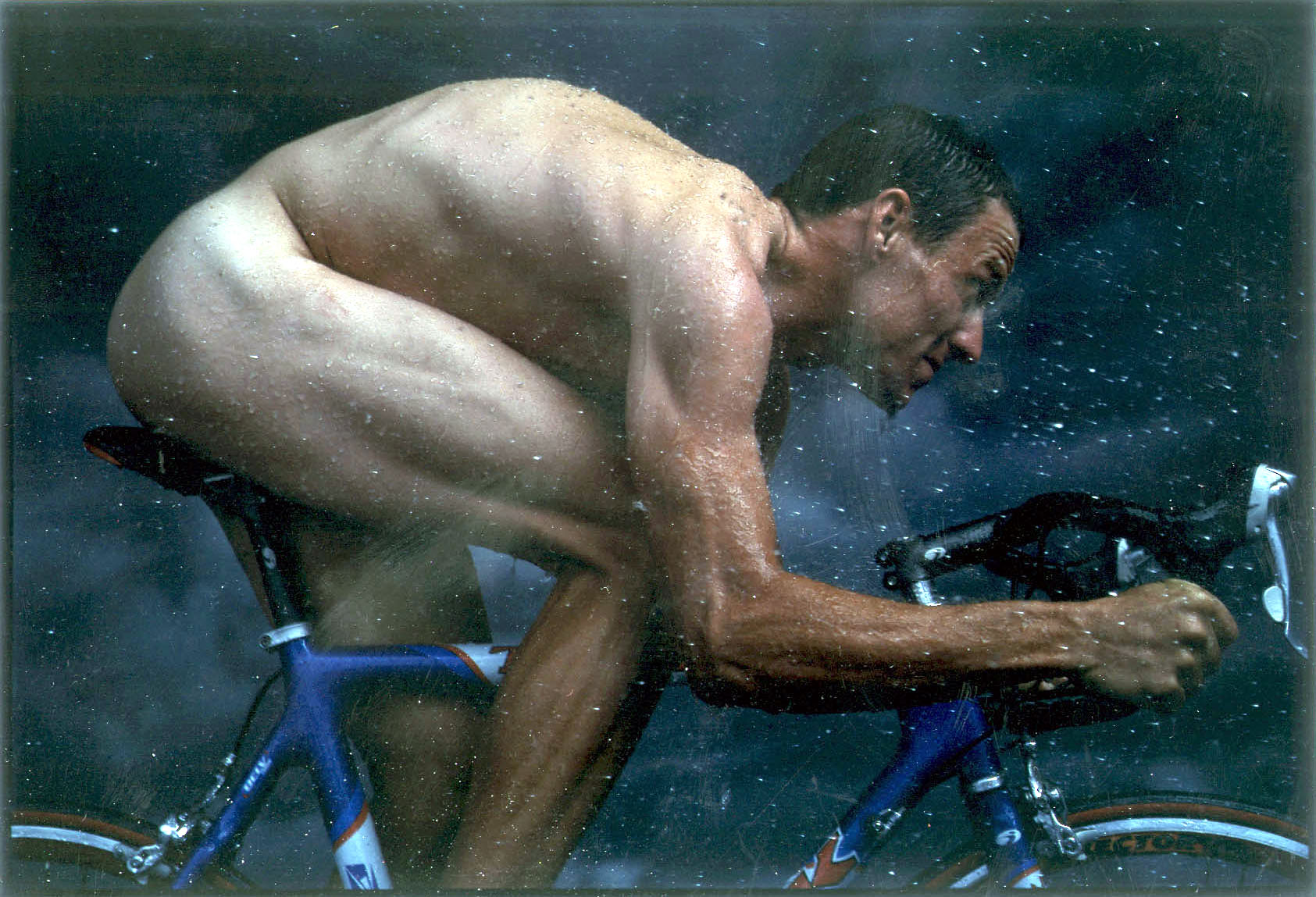
Its official. Lance Armstrong is coming out of retirement to go for an unprecedented 8th Tour de France win. In a Vanity Fair article he announced his decision to compete again in the premier race of the most physically grueling sports at the not so tender age of 37. Just to be clear, we are not talking about picking up a cricket bat again and stroking the ball around like Jayasuriya or even playing football where you can manage your pace of play or be used as an impact substitute for part of the game ala' Dennis Bergkamp. This is a 2200 mile muscle cell depolarizing, electrolyte depleting, flesh dehydrating, non-stop race through mountains and valleys at about 100 miles a day for three weeks. It's not tiring. Have you ever sat through a 2200 mile car journey? That's tiring. This is exhausting beyond recognition.

Why would Lance do it? Here is a man who is easily worth $300-$400 million. Lets cross out money from the list. He has won the Tour de France a record seven times, and that too consecutively. Cross out achievment. He has also gone on to raise $265 million for cancer research, not least through those oh so popular yellow "livestrong" wrist bands. Cross out altruism. And before winning these 7 yellow jerseys Armstrong got diagnosed with an aggressive form of testicular cancer and according to the VF article "had two surgeries: one to remove a cancerous testicle, another to remove two cancerous lesions on the brain. An additional 8 to 10 golf-ball-size tumors were found in his lungs. He’d been a dead man walking..... He was only 25 years old and had been given less than a 40 percent chance of survival." Cross out courage!

So why "un-retire"? Despite Armstrong's explanations that this time its "to raise awareness of the global cancer burden", I have my doubts. There is no reason to doubt his noble feelings for cancer research but I feel that is the crutch he is using for a come back. The history of sport is replete with examples of "all time greats" calling it a day and then coming back for one more try. Unfortunately, very few of these turn into happy endings and even if the initial foray is successful, they keep coming back until their legacy is somewhat tarnished.

Michael Jordan, the greatest basketball player of all time, came back from his Whitesox baseball jolly to the Chicago Bulls successfully for a "three-peat" of championships. But that wasn't enough. After another 2 years of retirement he came back with the Washington Wizards for 2 unsuccessful seasons where they failed to even make the play-offs and Jordan also suffered a torn knee cartilage. The Ice Hockey great Mario Lemieux came out of retirement until he admitted to not being able to keep up with the increased speed of the game and suffered a heart condition. Tennis legend Bjorn Borg tried a comeback a decade after calling it a day, wooden rackets and all, but couldn't manage a single win. Baseball ace Roger Clemens came back to the Yankees last year and struggled with a 6-6 record, abysmal by his standards. The list goes on and on; Martina Navratilova, Brett Favre, Evander Holyfield, Martina Hingis, Sugar Ray Leonard- and then the most tragic of all and the most famous, Muhammad Ali. By all accounts Ali should have hung up the gloves after the "Thrilla in Manilla", but he would go on to fight another ten times including punishing losses to Leon Spinks, Larry Holmes and Trevor Berbick. Forget tarnishing his legacy, the searing question is, would Ali be different today if he hadn't taken such powerful blows to the head that late in life?

What causes world beaters to come back again and again? Why can't they leave brilliant enough alone? I suggest the answer might be addiction- to achieving, to being the center of attention, to feeling like you are on top of the world. Sort of the same addiction that makes dictators stay too long. While most corporate chieftains retire in their sixties and sometimes well in their seventies when their testosterone levels are falling and their physical powers are over the hill, professional athletes call it a day in their thirties. What is a man (or woman) suppossed to do? You think Michael Jordan watched the newly minted 18 year old millionaires with attitudes come into the Wizards on the back of money he attracted to the game and didn't think "I can still take you to school"? I'm sure Lance Armstrong enjoys his time with his children and keeps busy with his foundation, but do you for a moment think he watched Carlos Sastre win the race this year and didn't think "I can still beat him". All his power, his importance, comes from what he achieved on his bike. Is there a paucity of crusaders for cancer research? People listen to Lance Armstrong because he is the seven time winner of the Tour de France, not because he had testicular cancer. And I suspect he knows that all too well.

Monday, 8 September 2008

Greatest Tennis Players of all time- A Numerical Approach

Watching Federer get to grand slam number 13 was inspiring enough to wonder about the greatest tennis players of all time. By popular consensus, the "grand slams" (a term borrowed from bridge) have come to signify the greatest achievement in tennis (and also golf). I can feel the pain, being one short of the grand slam (Australian) of attending the mens semi-finals myself.

So lacking the confidence needed to compare tennis players across time (Laver to Sampras), let alone across surfaces (Nadal to Federer), I resorted to simply rank the players in terms of majors won (win-loss record shown). The result is surprisingly close to the actual list I would have made, at least since the advent of the open era (1968):

1. Pete Sampras 14-4


2. Roger Federer
13-4


3. Roy Emerson 12-3 (career slam)


4. Rod Laver 11-6 (single season slam x2)


5. Bjorn Borg 11-5


6. Ken Rosewall 10-5


7. Bill Tilden 10-5


8. Ivan Lendl 8-11


9. Andre Agassi 8-7 (career slam)


10. Jimmy Connors 8-7


11. Fred Perry 8-2


12. John McEnroe 7-4


13. Matts Wilander 7-4


14. John Newcombe 7-3


15. Steffan Edberg 6-5


16. Boris Becker 6-4


17. Don Budge 6-1 (single season slam)