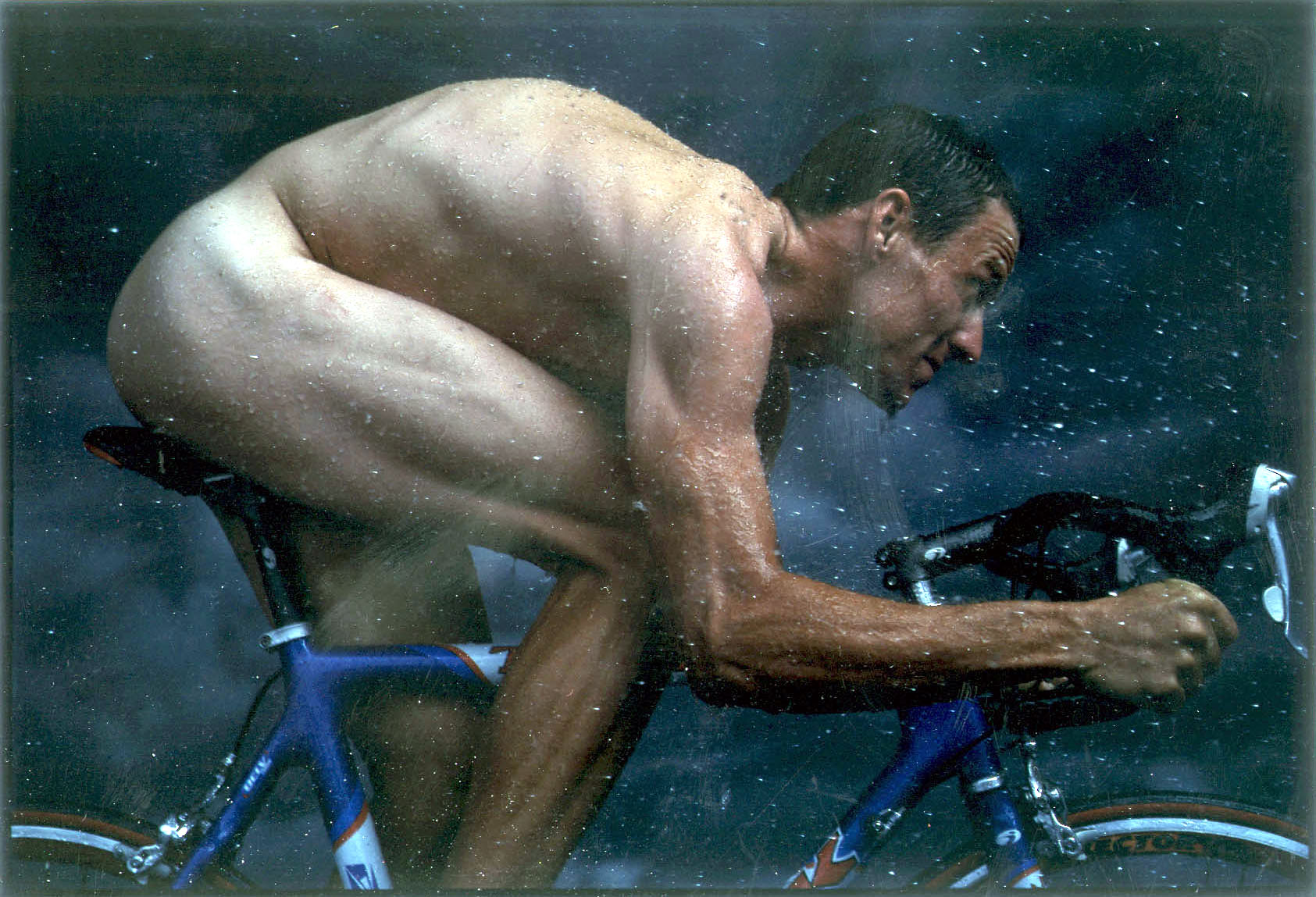
Its official. Lance Armstrong is coming out of retirement to go for an unprecedented 8th Tour de France win. In a Vanity Fair article he announced his decision to compete again in the premier race of the most physically grueling sports at the not so tender age of 37. Just to be clear, we are not talking about picking up a cricket bat again and stroking the ball around like Jayasuriya or even playing football where you can manage your pace of play or be used as an impact substitute for part of the game ala' Dennis Bergkamp. This is a 2200 mile muscle cell depolarizing, electrolyte depleting, flesh dehydrating, non-stop race through mountains and valleys at about 100 miles a day for three weeks. It's not tiring. Have you ever sat through a 2200 mile car journey? That's tiring. This is exhausting beyond recognition.
Why would Lance do it? Here is a man who is easily worth $300-$400 million. Lets cross out money from the list. He has won the Tour de France a record seven times, and that too consecutively. Cross out achievment. He has also gone on to raise $265 million for cancer research, not least through those oh so popular yellow "livestrong" wrist bands. Cross out altruism. And before winning these 7 yellow jerseys Armstrong got diagnosed with an aggressive form of testicular cancer and according to the VF article "had two surgeries: one to remove a cancerous testicle, another to remove two cancerous lesions on the brain. An additional 8 to 10 golf-ball-size tumors were found in his lungs. He’d been a dead man walking..... He was only 25 years old and had been given less than a 40 percent chance of survival." Cross out courage!
So why "un-retire"? Despite Armstrong's explanations that this time its "to raise awareness of the global cancer burden", I have my doubts. There is no reason to doubt his noble feelings for cancer research but I feel that is the crutch he is using for a come back. The history of sport is replete with examples of "all time greats" calling it a day and then coming back for one more try. Unfortunately, very few of these turn into happy endings and even if the initial foray is successful, they keep coming back until their legacy is somewhat tarnished.

 Michael Jordan, the greatest basketball player of all time, came back from his Whitesox baseball jolly to the Chicago Bulls successfully for a "three-peat" of championships. But that wasn't enough. After another 2 years of retirement he came back with the Washington Wizards for 2 unsuccessful seasons where they failed to even make the play-offs and Jordan also suffered a torn knee cartilage. The Ice Hockey great Mario Lemieux came out of retirement until he admitted to not being able to keep up with the increased speed of the game and suffered a heart condition. Tennis legend Bjorn Borg tried a comeback a decade after calling it a day, wooden rackets and all, but couldn't manage a single win. Baseball ace Roger Clemens came back to the Yankees last year and struggled with a 6-6 record, abysmal by his standards. The list goes on and on; Martina Navratilova, Brett Favre, Evander Holyfield, Martina Hingis, Sugar Ray Leonard- and then the most tragic of all and the most famous, Muhammad Ali. By all accounts Ali should have hung up the gloves after the "Thrilla in Manilla", but he would go on to fight another ten times including punishing losses to Leon Spinks, Larry Holmes and Trevor Berbick. Forget tarnishing his legacy, the searing question is, would Ali be different today if he hadn't taken such powerful blows to the head that late in life?
What causes world beaters to come back again and again? Why can't they leave brilliant enough alone? I suggest the answer might be addiction- to achieving, to being the center of attention, to feeling like you are on top of the world. Sort of the same addiction that makes dictators stay too long. While most corporate chieftains retire in their sixties and sometimes well in their seventies when their testosterone levels are falling and their physical powers are over the hill, professional athletes call it a day in their thirties. What is a man (or woman) suppossed to do? You think Michael Jordan watched the newly minted 18 year old millionaires with attitudes come into the Wizards on the back of money he attracted to the game and didn't think "I can still take you to school"? I'm sure Lance Armstrong enjoys his time with his children and keeps busy with his foundation, but do you for a moment think he watched Carlos Sastre win the race this year and didn't think "I can still beat him". All his power, his importance, comes from what he achieved on his bike. Is there a paucity of crusaders for cancer research? People listen to Lance Armstrong because he is the seven time winner of the Tour de France, not because he had testicular cancer. And I suspect he knows that all too well.