As a sports fan I'm always fascinated by sporting excellence (Federer winning the US Open) and sporting genius (Greatest Sport Stars of All Time), not least when the two come together. It is in this spirit that I want to introduce my majority non-British readership to the greatest darts player that ever lived, Phil "The Power" Taylor. He is the 13 time world champion from England.
Here is a video of Phil scoring one of his six live "nine darters" (the only player ever to have scored more than one on TV). For the uninitiated, a nine darter is the perfect score in darts, much like a 300 point game in bowling, a 147 break in snooker or hitting six sixes in an over in cricket. It is the absolute best a player can do, score 501 in 9 darts. Enjoy!
(oh, if you don't understand the commentators' Scottish accents, its probably because they are speaking Dutch!).
Monday, 15 September 2008
Sunday, 14 September 2008
Money Can't Buy You Love- But Gold Medals is Another Matter


"Sports do not build character, they reveal it". When John Wooden said those famous words he had those in mind who play sports. It turns out it reveals quite a bit about those who buy into sports as well.
Sporting success inspires people, provides a sense of accomplishment and pride, besides being a welcome diversion from bad news. I witnessed first hand this summer, the emotional uplift of a billion Indians when Abhinav Bindra won the first individual Olympic gold in his country's history. I remember from childhood, whenever things got tense under General Zia's martial law in Pakistan, we'd be treated to a rerun of some famous cricketing victory on state television. Who wants to protest when you can see Miandad bat instead?

Thinking about it, the surprise is that it took so long for nations to start throwing money at buying sporting success given all the positive externalities. China wanted to match its burgeoning economic might with gold medals and spent hundreds of millions of dollars through its state run sports system. And while the accompanying photograph of Chinese children gymnasts makes for more compelling newsprint, the British success was also criticized locally for diverting lottery money from community schemes to sports. Britain trebled its Olympic funding for Beijing to £235 million, funneling funding from other areas.
Then there is gas rich Qatar that has already taken the next logical step with all the subtlety of a jackhammer. In 2004, Qatari Saif Saaeed Shaheen broke the 3000 meter steeple chase world record. This would have been admirable for a country with a population of less than a million people except that until the year before, Shaheen was actually Stephen Chorono of Kenya and changed his nationality (and name for some reason) in return for $1,000 a month for life. There was an uproar in Kenya, but the undaunted Qataris continued their shopping spree by snapping up the Kenyan 5000m specialist Albert Chepkurui (now fittingly Ahmad Hassan Abdullah) next. These moves were probably inspired by the earlier wholesale purchase of eight Bulgarian weight-lifters for an alleged $1 million. In case you can't tell the Bulgarian silver medalist Alan Tsagaev from Qatari bronze medalist 'Said Assad' in the photo from Sydney Olympics below, here's a hint: Qatari flag (and track suit) has red in it.

Is there anything wrong with what Qatar has done? "I can't define it but I know it when I see it" was my first reaction. But a deeper look changed my mind. Is it ok for the rich countries to attract bankers and lawyers and doctors for financial reward, but not athletes? Is it the exclusive preserve of Ivy League educated professionals to sell out to the highest bidder? Surely, whats good for the goose is good for the gander.
Sporting success inspires people, provides a sense of accomplishment and pride, besides being a welcome diversion from bad news. I witnessed first hand this summer, the emotional uplift of a billion Indians when Abhinav Bindra won the first individual Olympic gold in his country's history. I remember from childhood, whenever things got tense under General Zia's martial law in Pakistan, we'd be treated to a rerun of some famous cricketing victory on state television. Who wants to protest when you can see Miandad bat instead?
Thinking about it, the surprise is that it took so long for nations to start throwing money at buying sporting success given all the positive externalities. China wanted to match its burgeoning economic might with gold medals and spent hundreds of millions of dollars through its state run sports system. And while the accompanying photograph of Chinese children gymnasts makes for more compelling newsprint, the British success was also criticized locally for diverting lottery money from community schemes to sports. Britain trebled its Olympic funding for Beijing to £235 million, funneling funding from other areas.
Then there is gas rich Qatar that has already taken the next logical step with all the subtlety of a jackhammer. In 2004, Qatari Saif Saaeed Shaheen broke the 3000 meter steeple chase world record. This would have been admirable for a country with a population of less than a million people except that until the year before, Shaheen was actually Stephen Chorono of Kenya and changed his nationality (and name for some reason) in return for $1,000 a month for life. There was an uproar in Kenya, but the undaunted Qataris continued their shopping spree by snapping up the Kenyan 5000m specialist Albert Chepkurui (now fittingly Ahmad Hassan Abdullah) next. These moves were probably inspired by the earlier wholesale purchase of eight Bulgarian weight-lifters for an alleged $1 million. In case you can't tell the Bulgarian silver medalist Alan Tsagaev from Qatari bronze medalist 'Said Assad' in the photo from Sydney Olympics below, here's a hint: Qatari flag (and track suit) has red in it.
Is there anything wrong with what Qatar has done? "I can't define it but I know it when I see it" was my first reaction. But a deeper look changed my mind. Is it ok for the rich countries to attract bankers and lawyers and doctors for financial reward, but not athletes? Is it the exclusive preserve of Ivy League educated professionals to sell out to the highest bidder? Surely, whats good for the goose is good for the gander.
Friday, 12 September 2008
Federer Made Me Fail the Tebbit Test
I admit it. I failed the "Tebbit Test". For those who need a refresher, Baron Norman Tebbit of Chingford famously devised this test a decade or two ago during an England-Pakistan cricket match. The honorable Baron was rather disturbed by the behavior of British Pakistanis betraying Queen and country and cheering for the men in green instead. He suggested that if there was a 'cricket test' to see which side you cheer for, a large portion of the British Asian population would fail it. The tabloids loved the idea and ran with it and it was 'christened' (no pun) the "Tebbit Test". A concept the honorable Barron returned to after the 7/7 London train bombings, making us feel like the enemy for cheering for the wrong cricket team, but I digress.
So a few years ago when I pledged allegiance to the Queen and got a purple passport (to prevent latex glove checks at airports, but I digress again), it felt like converting to a religion without really believing in it. Will I cheer for England cricket when they play Pakistan? Not if hell freezes over! But I was a bit surprised when I found myself gradually cheering British. First it was at the Ashes, but then I told myself who doesn't like rooting against the Aussie plonks. Next I found myself deflated when the England Football team got the two failures under Ericcson and I cheered hard for Britain at the Olympics. So like a Jew who eats pork, I allowed myself this one excess in my "Britishness". Other than when they play Pakistan at cricket, I cheer for all teams British.

It was in the same spirit that I found myself yelling my lungs out in support of Murray when he played Nadal in the semi-final of the US Open. Here was a chance (for us British-yeah!) to make up for the years of under-achievement by Henman. And what a victory it was. Murray out-muscled the muscular Nadal and won a beautiful game through powerful serves and relentless returns. He was even un-Murray like gracious in victory. So on Monday I put the kids to sleep early and settled in for a rooting session for a first British grand slam victory since Fred Perry in 1936.
Federer was in no mood to be denied though for he was on his own quest. If this was a "coming of age" match for Murray, it was a "mid-life crisis" for Federer. This year he lost his Wimbledon crown, his top world ranking and failed to get the Olympic gold. He knew he'd be written off by pundits if he lost this too and perhaps he was equally fighting his inner demons after so many defeats. The way he answered those doubts left me shaking my head in disbelief and appreciation and left little room for melancholy at the downing of my boy Murray. Federer's flowing ground strokes were back and the nimble touch was present as ever. It was poetry in motion and as a sports fan you knew it was time to enjoy an all time great back to his best. Grand slam number 13 leaves him one short of all time leader Sampras (see previous post) and with the young and hungry Nadal, Djokovic and Murray closing in, there can't be many more left in the tank. So with apologies to Baron Tebbit, cheering Murray will have to wait and I think I'll enjoy the Federer phenomenon while it lasts...
So a few years ago when I pledged allegiance to the Queen and got a purple passport (to prevent latex glove checks at airports, but I digress again), it felt like converting to a religion without really believing in it. Will I cheer for England cricket when they play Pakistan? Not if hell freezes over! But I was a bit surprised when I found myself gradually cheering British. First it was at the Ashes, but then I told myself who doesn't like rooting against the Aussie plonks. Next I found myself deflated when the England Football team got the two failures under Ericcson and I cheered hard for Britain at the Olympics. So like a Jew who eats pork, I allowed myself this one excess in my "Britishness". Other than when they play Pakistan at cricket, I cheer for all teams British.
It was in the same spirit that I found myself yelling my lungs out in support of Murray when he played Nadal in the semi-final of the US Open. Here was a chance (for us British-yeah!) to make up for the years of under-achievement by Henman. And what a victory it was. Murray out-muscled the muscular Nadal and won a beautiful game through powerful serves and relentless returns. He was even un-Murray like gracious in victory. So on Monday I put the kids to sleep early and settled in for a rooting session for a first British grand slam victory since Fred Perry in 1936.
Federer was in no mood to be denied though for he was on his own quest. If this was a "coming of age" match for Murray, it was a "mid-life crisis" for Federer. This year he lost his Wimbledon crown, his top world ranking and failed to get the Olympic gold. He knew he'd be written off by pundits if he lost this too and perhaps he was equally fighting his inner demons after so many defeats. The way he answered those doubts left me shaking my head in disbelief and appreciation and left little room for melancholy at the downing of my boy Murray. Federer's flowing ground strokes were back and the nimble touch was present as ever. It was poetry in motion and as a sports fan you knew it was time to enjoy an all time great back to his best. Grand slam number 13 leaves him one short of all time leader Sampras (see previous post) and with the young and hungry Nadal, Djokovic and Murray closing in, there can't be many more left in the tank. So with apologies to Baron Tebbit, cheering Murray will have to wait and I think I'll enjoy the Federer phenomenon while it lasts...
A Billion Dollars between Lunch and Tea? That's just not Cricket
ESPN Star Sports, the Asian broadcaster part owned by Rupert Murdoch, will pay $975 million for the 10yr exclusive rights for the Twenty20 Champions League, a tournament where the first ball has not yet been bowled. The Indian Premier League (IPL) had earlier bagged a $1.03 billion 10 year deal for 60 games a year, but the Champions League will only have 22 to 25 games a year. In response to the IPL riches, the Texas billionaire Alan Stanford has already announced a $20 million match in November between England and a West Indies all star team. Each member of the winning team will win $1 million, an amount equal to the total prize money available for the 12 teams that participated in the 1999 cricket world cup in England.


Reminds me of the famous Churchill phrase, "never was so much owed by so many to so few". In this case the "so few" not the valiant fighters of the RAF, but the Board of Control for Cricket in India (BCCI). Representative for the largest share of cricket watchers in the world, they have been quick to pounce on the commercial opportunities and bounty is now being shared by cricket players all over the world. Not long ago the man of the match award at International cricket matches would get a $500 prize. Winning members of the Stanford match will earn that amount every 5 seconds of being on the field. Cricket has been late in claiming its commercial place among world sports, but you know a sport has arrived when Nike turns it into an advert.
Reminds me of the famous Churchill phrase, "never was so much owed by so many to so few". In this case the "so few" not the valiant fighters of the RAF, but the Board of Control for Cricket in India (BCCI). Representative for the largest share of cricket watchers in the world, they have been quick to pounce on the commercial opportunities and bounty is now being shared by cricket players all over the world. Not long ago the man of the match award at International cricket matches would get a $500 prize. Winning members of the Stanford match will earn that amount every 5 seconds of being on the field. Cricket has been late in claiming its commercial place among world sports, but you know a sport has arrived when Nike turns it into an advert.
Thursday, 11 September 2008
The 5 Most Memorable Sports Ads on TV
Advertisements have been inspired by sports performances or sports stars for a long time. At least over a hundred years since we can see W.G.Grace in a Colman's Mustard print Ad in this photo. While commercial opportunities have done their part in making sports bigger and better, there have also been occasions when the ads themselves have inspired people to talk about sport or even take up sport.
To relieve the monotony of reading words, I thought I'd list my 5 favorite TV Ads. The first two are simply inspiring in a warm and fuzzy way, the third stands out for the artistic genius skills, and the last two are inspiring because they are humorous. Unfortunately, most of these ads are Nike ads as other companies tend to focus on their products, while Nike tends to glorify the sport or the star.
1. Nike- Earl Woods Speakover
Tiger Wood's father Earl Woods speaks in the background (posthomously) and tells us about how he "instilled" the game into Tiger as a kid, got him immune to distractions and focused on the task at hand- hitting the golf shot. Especially powerful since the media initially berated Earl Woods for his grand visions of his son and the messiah like impact he felt his son will have on the sport and beyond. Turns out papa Woods wasn't that far off. And after the poor guy passed away, every one came around to see it his way. The last line is particularly powerful and hangs in the air because if you've seen Tiger play, you know it's so true: "I told him Tiger, I promise you that you'll never meet another person as mentally tough as you in your entire life; and he hasn't, and he never will."
2. Addidas- Laila Ali vs Muhammad Ali
"Impossible isn't a fact, it's an opinion" starts the ad in Laila Ali's voice while her father enters the ring and shadow boxes and does his patented cross-over dance. The other boxer is Laila herself. "So when my father looks impossible in the eye and defeats it- again and again, what do you think I'm gonna do when they say women shouldn't box?" and with that she socks one to her father almost sending him tumbling.. "rumble young girl, rumble"... sends chills down your spine.
3. Nike- bouncing golf ball
This commercial was shot in one go without any edits and became the subject of a lawsuit between Acushnet (parent company of Titliest) and Nike for who held commercial rights of Tiger woods. Meanwhile golf fans from Japan to the US shook their heads in disbelief at the skill level and started practicing bouncing golf balls on their wedges instead of practicing their golf shots.
4. Nike- Is it the shoes?
Any list of great ads cannot ignore this Spike Lee/Michael Jordan number. This is the original ad that got Nike on the map and catapulted Jordan from being a sports star to a star period. Need I say more?
5. Nike- Roger Federer
Roger Federer and his make belief coach. Pretty funny.
Wednesday, 10 September 2008
Monkey off England's Back
Revenge is a dish best served cold. In one of the most anticipated England matches in recent years, England demolished Croatia 4-1 in Zagreb in a World Cup qualifier to avenge the defeats in the Euro qualifiers. Mondial 2010 Afrique du Sud, here comes England!

It was the coming out party of Arsenal prodigy Theo Walcott who scored a hat trick, while Fabio Capello also proved himself by out manoeuvring Slaven Bilic's Croatia. The same pundits who were starting to question Capello's class are now heaping praise on him on TV minutes after the game. Until the next set back....
I mentioned in my previous post that the England coach is of proven pedigree and if any questions need to be asked it is of the England stars who turn out for their clubs but not for their country, at least in spirit. Croatia had an off game today and it helped that they played with ten men for the last 35 minutes or so. England were well organized for a change but playing as underdogs to a team that beat you twice in the last year is one thing, reproducing that form game in game out in front of 90,000 impatient Wembley fans is another. England needs to keep the focus. Well begun is only half done.
Why Athletes Find it Difficult to Stay Retired
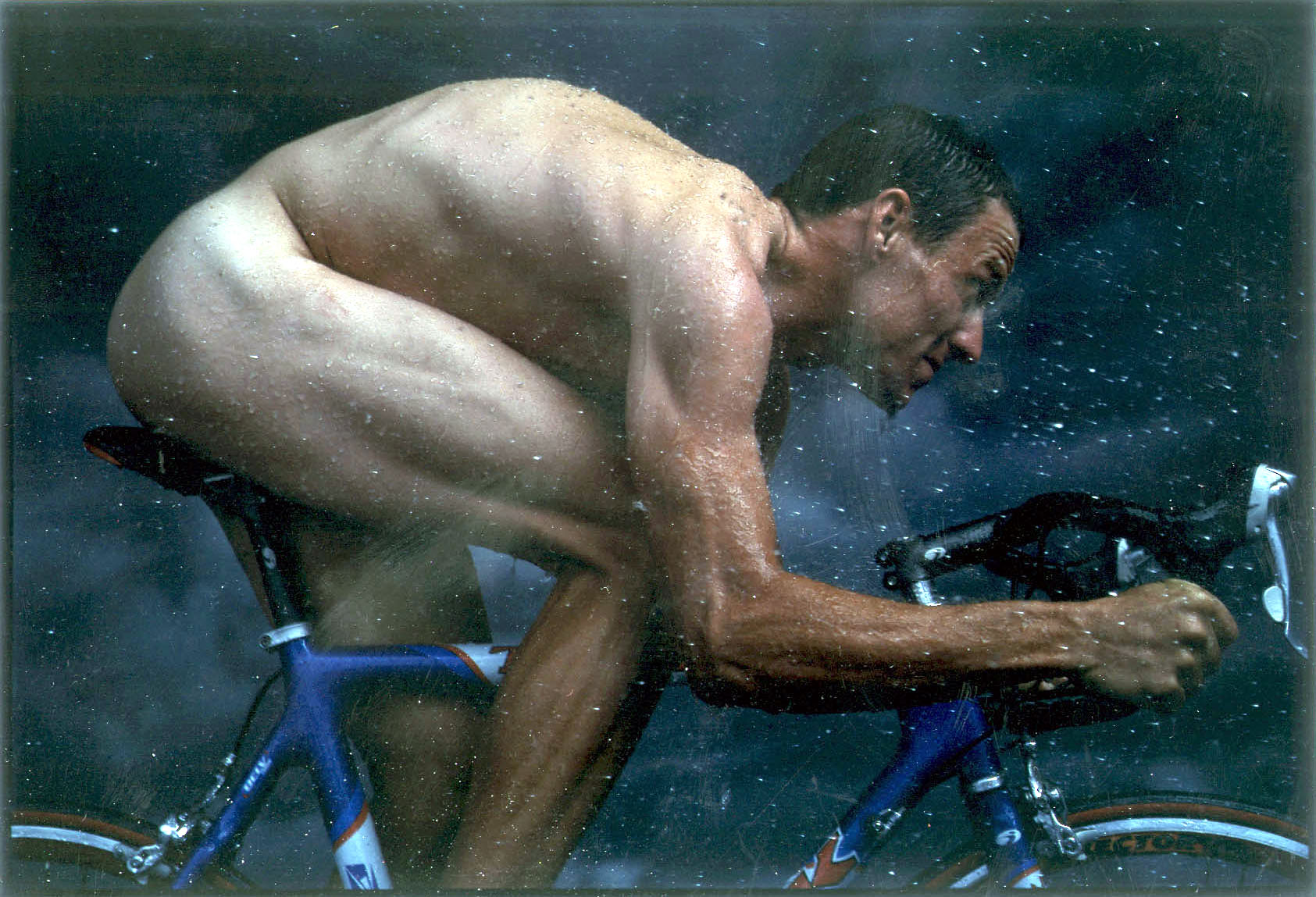
Its official. Lance Armstrong is coming out of retirement to go for an unprecedented 8th Tour de France win. In a Vanity Fair article he announced his decision to compete again in the premier race of the most physically grueling sports at the not so tender age of 37. Just to be clear, we are not talking about picking up a cricket bat again and stroking the ball around like Jayasuriya or even playing football where you can manage your pace of play or be used as an impact substitute for part of the game ala' Dennis Bergkamp. This is a 2200 mile muscle cell depolarizing, electrolyte depleting, flesh dehydrating, non-stop race through mountains and valleys at about 100 miles a day for three weeks. It's not tiring. Have you ever sat through a 2200 mile car journey? That's tiring. This is exhausting beyond recognition.
Why would Lance do it? Here is a man who is easily worth $300-$400 million. Lets cross out money from the list. He has won the Tour de France a record seven times, and that too consecutively. Cross out achievment. He has also gone on to raise $265 million for cancer research, not least through those oh so popular yellow "livestrong" wrist bands. Cross out altruism. And before winning these 7 yellow jerseys Armstrong got diagnosed with an aggressive form of testicular cancer and according to the VF article "had two surgeries: one to remove a cancerous testicle, another to remove two cancerous lesions on the brain. An additional 8 to 10 golf-ball-size tumors were found in his lungs. He’d been a dead man walking..... He was only 25 years old and had been given less than a 40 percent chance of survival." Cross out courage!
So why "un-retire"? Despite Armstrong's explanations that this time its "to raise awareness of the global cancer burden", I have my doubts. There is no reason to doubt his noble feelings for cancer research but I feel that is the crutch he is using for a come back. The history of sport is replete with examples of "all time greats" calling it a day and then coming back for one more try. Unfortunately, very few of these turn into happy endings and even if the initial foray is successful, they keep coming back until their legacy is somewhat tarnished.

 Michael Jordan, the greatest basketball player of all time, came back from his Whitesox baseball jolly to the Chicago Bulls successfully for a "three-peat" of championships. But that wasn't enough. After another 2 years of retirement he came back with the Washington Wizards for 2 unsuccessful seasons where they failed to even make the play-offs and Jordan also suffered a torn knee cartilage. The Ice Hockey great Mario Lemieux came out of retirement until he admitted to not being able to keep up with the increased speed of the game and suffered a heart condition. Tennis legend Bjorn Borg tried a comeback a decade after calling it a day, wooden rackets and all, but couldn't manage a single win. Baseball ace Roger Clemens came back to the Yankees last year and struggled with a 6-6 record, abysmal by his standards. The list goes on and on; Martina Navratilova, Brett Favre, Evander Holyfield, Martina Hingis, Sugar Ray Leonard- and then the most tragic of all and the most famous, Muhammad Ali. By all accounts Ali should have hung up the gloves after the "Thrilla in Manilla", but he would go on to fight another ten times including punishing losses to Leon Spinks, Larry Holmes and Trevor Berbick. Forget tarnishing his legacy, the searing question is, would Ali be different today if he hadn't taken such powerful blows to the head that late in life?
What causes world beaters to come back again and again? Why can't they leave brilliant enough alone? I suggest the answer might be addiction- to achieving, to being the center of attention, to feeling like you are on top of the world. Sort of the same addiction that makes dictators stay too long. While most corporate chieftains retire in their sixties and sometimes well in their seventies when their testosterone levels are falling and their physical powers are over the hill, professional athletes call it a day in their thirties. What is a man (or woman) suppossed to do? You think Michael Jordan watched the newly minted 18 year old millionaires with attitudes come into the Wizards on the back of money he attracted to the game and didn't think "I can still take you to school"? I'm sure Lance Armstrong enjoys his time with his children and keeps busy with his foundation, but do you for a moment think he watched Carlos Sastre win the race this year and didn't think "I can still beat him". All his power, his importance, comes from what he achieved on his bike. Is there a paucity of crusaders for cancer research? People listen to Lance Armstrong because he is the seven time winner of the Tour de France, not because he had testicular cancer. And I suspect he knows that all too well.
Subscribe to:
Posts (Atom)

